Culinary Sketching: How Chefs and Pastry Chefs Turn Ideas into Plates
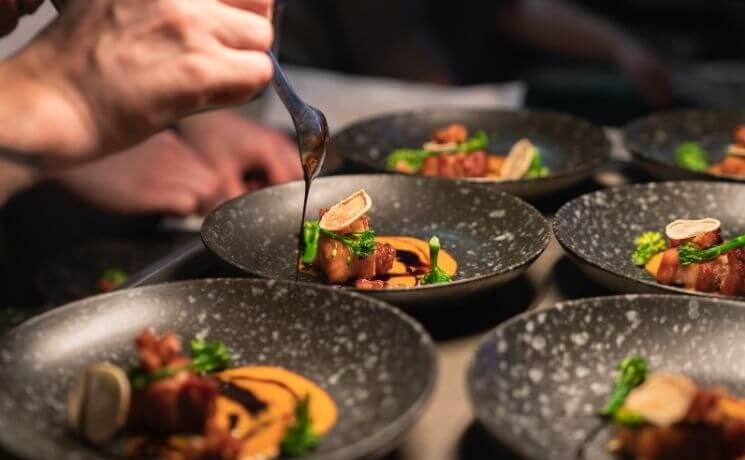
In a professional kitchen, a winning plate often begins in a notebook, on a prep sheet, on a tablet or beside a workstation, with a few lines, circles, arrows and notes.
For chefs, pastry chefs and production teams, drawing a dish is a working method. A sketch helps visualize plating, balance textures, plan height, clarify execution and support plate consistency, even when service is moving fast.
In restaurants, hotels, catering operations, bakery counters and institutional foodservice, culinary sketching becomes the link between creativity and operational efficiency.
What is culinary sketching about?
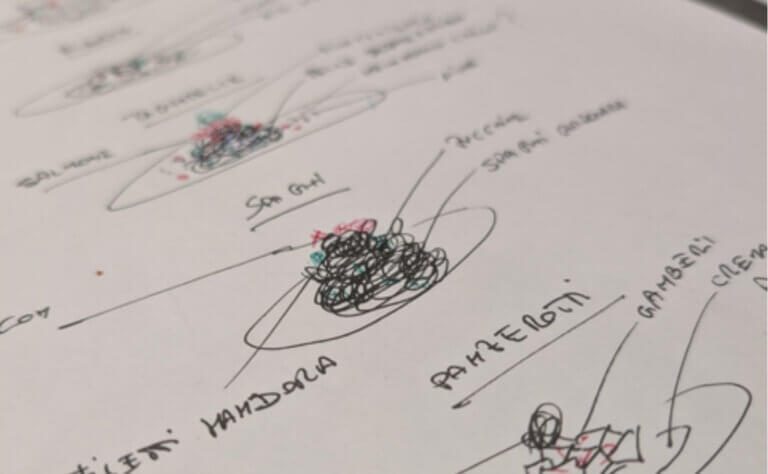
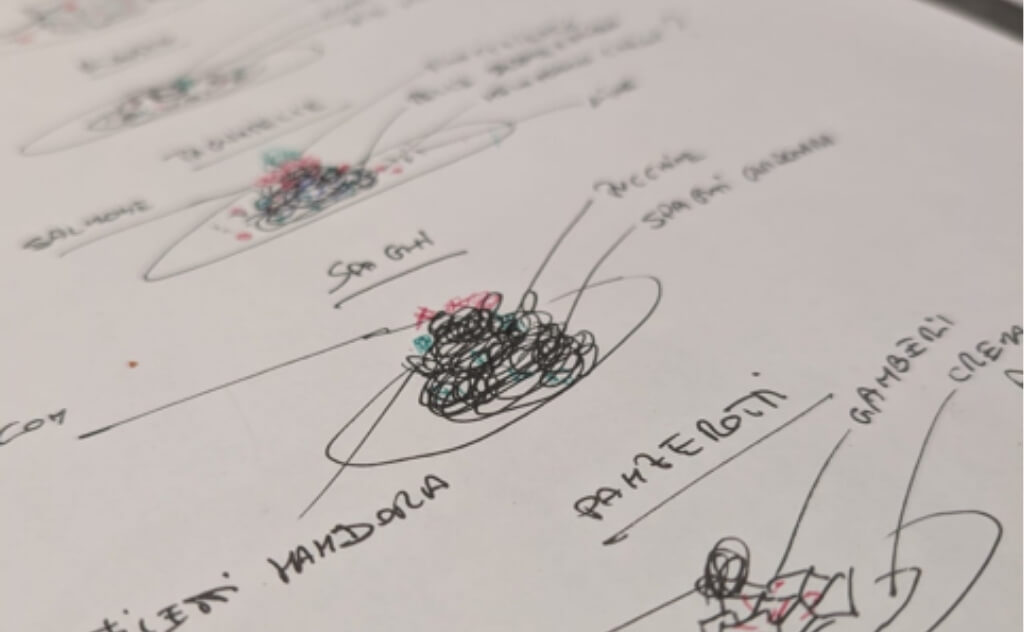
Culinary sketching is the practice of drawing a dish before producing it. The chef or pastry chef maps out the main components, sauces, garnishes, textures, height and sometimes even the service sequence.
The goal is not to create a perfect illustration. The goal is to build a visual blueprint for the plate:
- A top view helps organize the composition
- A 45-degree view helps figuring out height
- A cross-section helps define the layers of a dessert
- Notes can indicate texture, portion, temperature or finishing steps
Why do renowned chefs sketch their dishes?
Culinary drawing plays an important role in the creative thinking of several leading chefs. Ferran Adrià, the chef behind elBulli, was the subject of Ferran Adrià: Notes on Creativity at The Drawing Center in New York. The institution describes it as the first major museum exhibition focused on the visualization and drawing practices of the chef, highlighting the role of drawing in his quest to understand creativity.
The elBullifoundation also explains that Adrià’s drawings were used to conceive elBulli creations and show how they could later become reality.
For other chefs, sketches help design the guest experience before the first plate reaches the table. In From Paper to Plate: Recipe Sketches from Alinea and Le Bernardin, SAVEUR notes that chefs such as Grant Achatz of Alinea and Michael Laiskonis, then pastry chef at Le Bernardin, also begin some creations at the drawing board, using sketches that precede the final plated dish.
The connection between cuisine and visual art is also central to Massimo Bottura. On the official Osteria Francescana website, contemporary art is described as an inspiration, a guide and a muse, opening possibilities and animating the dialogue between dining room and kitchen.
In this approach, artistic references become a driver of composition, colour and storytelling.
For Michel and Sébastien Bras, inspiration is rooted in place. Their iconic Gargouillou is described by Michel BRAS Côté Japon as an ever-changing composition of approximately 80 vegetables, flowers, herbs, sprouts, roots and seeds, inspired by the flowers and herbs of Aubrac.
n that spirit, a sketch, whether mental or drawn, becomes a way to organize nature on the plate without losing its sense of movement.
These approaches are different, but they share one principle: before a dish is served, it is designed.
The benefits of sketching in professional kitchens
1. Visualize before producing
Sketching allows chefs to see the full dish before committing team time, ingredients and production effort. It helps test the balance between the centre of the plate, garnishes, sauce and negative space.
For pastry chefs, this is especially useful for plated desserts, individual entremets, tartlets, verrines and mignardise buffets. A sketch helps define layers, contrast, rhythm and finishing details.
2. Solve problems before service
A drawing quickly reveals what words may not show: too many elements on the plate, a sauce in the wrong position, unstable height, an unbalanced garnish or a dessert that lacks structure.
Correcting a sketch takes seconds. Modifying a dressed plate costs time and product.
3. Standardize execution
In hotel kitchens, catering operations, high-volume restaurants and institutional production, consistency matters. A sketch becomes a visual reference for the team.
It shows where each component belongs, what portion should be used, what finishing touch is expected and what result the team should aim for. It supports training, reduces variation and helps every team member understand the chef’s intention.
4. Manage portions and cost more precisely
Culinary sketching is not only about presentation. It also helps plan sauce quantity, garnish count, portion size, plate choice and assembly sequence.
For chefs and pastry chefs, it is a practical control tool: less improvisation, less waste and more precision.
A simple method for sketching a dish
To make culinary sketching part of the creative process, the method should stay simple and service-oriented.
1. Define the purpose of the dish
Clarify the context: signature plate, plated dessert, catering bite, buffet item, banquet menu, quick-service format or premium dining experience.
2. List the components
Write down the base, protein or dessert centre, garnishes, sauce, crunchy element, creamy texture, herbs, fruit, décor and finishing steps.
3. Choose the canvas
The plate, bowl, verrine, tartlet shell or tray influences the entire composition. A round plate does not invite the same layout as a rectangular plate or an individual bite.
4. Use simple shapes
Work with circles, ovals, lines, dots and colour blocks. The goal is to understand structure, not to produce a perfect drawing.
5. Think in texture and height
Add notes such as crunchy, mousse, coulis, gel, crumble, tuile, fresh fruit, hot element or cold element. Include layers, inserts and height.
6. Plan the assembly sequence
A good sketch can become a mini technical sheet: component one, sauce, garnish, finishing touch, send.
7. Test, photograph and adjust
After the first trial, compare the sketch to the actual plate. Adjust portions, spacing, colour or volume. Photograph the final version to capture a visual standard.
Where ready-to-use culinary solutions fit into creative execution
In foodservice, teams need to balance creativity, speed, consistency and waste control.
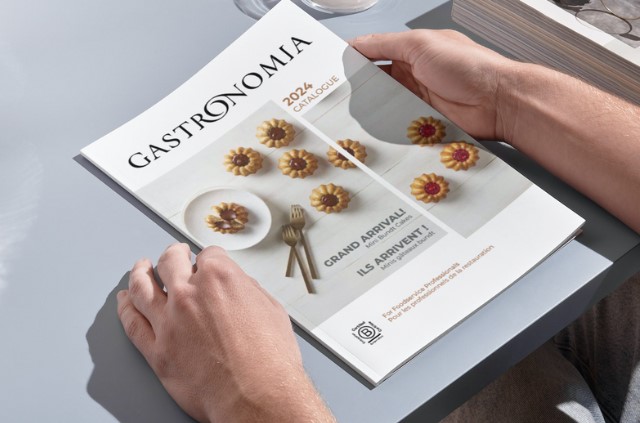
This is where frozen culinary solutions can play an important role. The Gastronomia 2025 catalogue highlights that foodservice chefs need products that are reliable, easy to portion and designed to simplify work organization while supporting creativity in the kitchen.
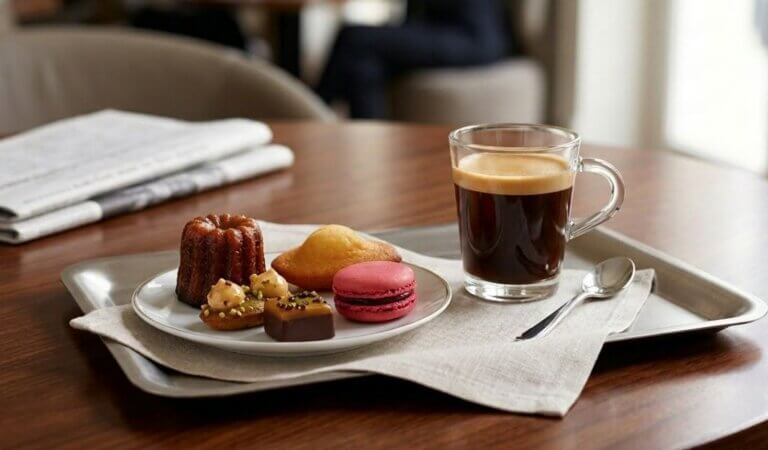
For a chef, a ready-to-fill base, consistent fruit purée, quality dough, mignardise, individual dessert or ready-to-bake pastry can become the starting point of a sketch. The team saves time on base preparation and can focus on finishing, plating, flavour balance and visual identity.
Why pastry chefs can benefit from sketching
In professional pastry, sketching is especially valuable for visualizing layers, cuts, contrast and the final portion.
A plated dessert can be drawn in three views: top view for composition, side view for height and cross-section for texture. A tartlet can be designed as a small landscape: shell, cream, fruit, shine, crunch and finishing detail. A mignardise can be sketched to confirm readability in a bite format.
Sketching also helps adapt a dessert to different service contexts: tasting menu, banquet, coffee break, hotel buffet, pastry counter or catering service. The same idea can live in several formats when it is visually planned from the start.
Draw better to serve better
Culinary sketching is not reserved for fine dining restaurants. It is a simple, fast and accessible tool that can improve creation, communication and consistency in professional kitchens.
In a foodservice environment where menus need to be creative, profitable and practical, drawing a dish before producing it is not a detour. It is often the most direct path to a better-designed plate.
The perfect partner for wine tastings
The gougère, which is quick and easy to prepare (taking just 14 minutes to bake), showcases your wine while reinforcing your professional expertise.
Gougère Puff Filled with Comté Cheese
A bite-sized cocktail piece with a generous melting filling (over 14% of PDO Comté Cheese). The guarantee of a premium bite: elaborate piece with matured French Comté Cheese, and hand-finished.